Showing posts with label Greenwich. Show all posts

Sunday, November 02, 2025

Family trip to London: Day 2, Greenwich

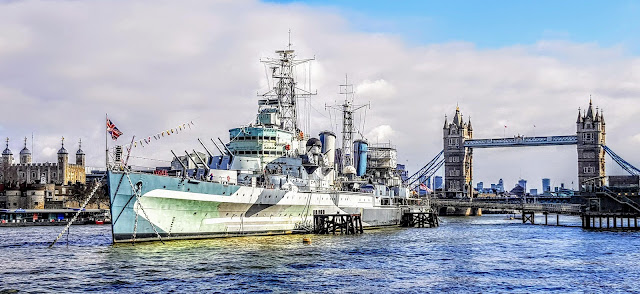
The view from Greenwich towards the City of London
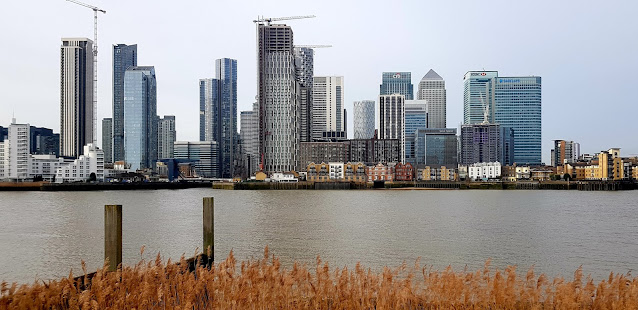
Looking towards The Shard from onboard Cutty Sark.

Friday October 31, 2025.

As is usual I awoke before everyone else.

So, without waking anyone I got myself together, dressed and sneaked out of the room. Once outside I turned south and went exploring. Tower Bridge Road was busy with traffic, while the paths were empty, except for those getting a morning jog in before work.

Page's Walk Railway Houses
The Railway Houses, Page's Walk.

I crossed Tower Bridge Road and headed along Grange Road, before turning down Page's Walk. Here I saw the former stables buildings of the London and Croydon Railway and the South Eastern Railway, which opened a station, The Bricklayers Arms station, near here in 1844. It closed in 1981, with many of the buildings, including the station, demolished. Next to these stables are a row of railway houses, with brightly painted doors and shutters.

A Tomb
St Mary Magdalen Churchyard.

I then headed back to Tower Bridge Road and visited the Bermondsey Antique Market, in Bermondsey Square, which was still being set up as I arrived. This antiques market is on every Friday, from 06:00 till 14:00, and has been operating since 1950. I then walked through St Mary Magdalen Churchyard, where I saw another drinking fountain and a wide variety of tombs and gravestones. A few minutes later and I was back in the hotel room, where Keilyn was dressed and Emma was just waking up.

Breakfast was next, with us all tucking in and eating well. Full English, pancakes, toast, juice and coffee were all devoured, before we headed back to the room to pack and check out. After a visit to an Asda Express, to top up on drinks and snacks for the day ahead, we waited for a North Greenwich-bound 188 bus. 

Deptford Creek
Deptford Creek.

After boarding the bus, Keilyn and I headed upstairs to grab a seat at the front, while Emma chose to sit downstairs. The route took us down Tooley Street and onto Jamaica Road, where we passed King's Stairs Gardens and Southwark Park, before we moved onto Lower Road and then Surrey Quays Road. This brought us onto Redcliff Road, passing the Greenland Dock Bascule Bridge, and then back onto Lower Road. Evelyn Street, was next, passing Deptford Park as we approached Deptford. Creek Road took us over Deptford Creek and, shortly after, we alighted at Cutty Sark for Maritime Greenwich.

Cutty Sark
Cutty Sark.

Greenwich Church Street brought us to Cutty Sark Gardens and today's visit... Cutty Sark. 

The last time that we had been onboard Cutty Sark was Saturday October 13, 2012, when Emma and I had taken Erin, who was eleven months old, aboard. So, we made our way into the gift shop, where we purchased our tickets, and entered this historic vessel from 1869.

Lower Hold
The Lower Hold of Cutty Sark.

We began our exploration of what was once the fastest sea vessel in the world by entering the rear of the Lower Hold, via a doorway cut through the starboard side of the hull. The floor of the Lower Hold is painted as though you are walking on the tops of tea boxes and also contains the Michael Edwards Studio Theatre, where a short video tells the history of Cutty Sark. Boxes of tea were also covered in photographs and snippets of the ship's history, which we passed as we made our way forward towards the front hatch, that would allow us to climb up to the 'Tween Deck.

'Tween Deck
The 'Tween Deck of Cutty Sark.

The first part of the 'Tween Deck, that we explored, was the fo'c's'le, which, considering its small size, was once home to twenty men. Following the ship's second voyage this was abandoned and the men moved into the forward deckhouse.  The deckhouse's previous occupants, the apprentices and petty officers, moved to a new aft deckhouse.

Interactive displays, models, personal items and much more were displayed throughout and along the entire deck, which we all studied. We then headed forward, once again, and climbed the steps to reach the Main Deck.

Canary Wharf
The view from the Anchor Deck.

Our first visit was to the Anchor Deck, from where we could look out at the views of London from this unique perspective. We then headed to the Weather Deck, where we explored the deckhouse and workshops, before watching some children enjoying climbing the rigging.

Ship's Wheel
Keilyn takes the wheel.

We then moved towards the Poop Deck, where Keilyn and I had our photo taken with the Ship's Wheel. Emma and Keilyn headed down to the Dry Dock, leaving me to explore the Master's Cabin alone. 

Monday, April 22, 2024

Warships on the River Thames

HMS Belfast
HMS Belfast, the Tower of London and Tower Bridge (2018).

Over the centuries the River Thames has seen many ships cruise her waters. Some of these ships were built in Deptford, or one of the other shipyards along her banks, while other ships were broken up on the banks of the River Thames, when they were decommissioned. 

Since the end of World War II, with the creation of NATO, ships from various navies from a myriad of NATO powers have visited London, often mooring at Greenwich or Canary Wharf docks, while others go upstream and moor next to HMS Belfast (C35).

Below are just a few of the Naval ships that have visited the River Thames.

HMS Belfast and HNLMS Luymes
HNLMS Luymes alongside HMS Belfast (2019).

HNLMS Luymes (A803) is a hydrographic survey vessel of the Royal Netherlands Navy.

HMS Belfast from The Shard
HMS Belfast from The Shard (2019).

HMS Belfast played a major role in the sinking of the German Ship, Scharnhorst, in 1943, before taking part in the D-Day landings in 1944, where she was one of the first ships to open fire. Her guns were so powerful that, when fired, they cracked the toilet bowls onboard.

HNoMS Nordkapp alongside HMS Belfast
HNoMS Nordkapp alongside HMS Belfast (2023).


The HNoMS Nordkapp (A531) serves as the flagship of Standing NATO Mine Countermeasures Group One.

HMS Illustrious at Greenwich
HMS Illustrious at Greenwich, with the Cutty Sark in the background (2013).

The Royal Navy Invincible-class aircraft carrier HMS Illustrious (R06) on a visit to Greenwich, in 2013. She was commissioned in 1982 and was decommissioned in 2014. She was intended to become a museum, much like HMS Belfast, but all the bids fell through as the upkeep of the 22,000-ton ship was not feasible, and so was sold for scrap in 2016.

HMS Illustrious at Greenwich
HMS Illustrious at Greenwich (2013).

HMS Illustrious at Greenwich
HMS Illustrious at Greenwich (2013).

HMS Blyth
HMS Blyth cruising down the River Thames (2013).

HMS Blyth (M111) is a Sandown-class minehunter, launched in 2000 and decommissioned in 2021.

HNoMS Nordkapp alongside HMS Belfast
HNoMS Nordkapp alongside HMS Belfast (2023).

German frigate Mecklenburg-Vorpommern alongside HMS Belfast
German frigate Mecklenburg-Vorpommern alongside HMS Belfast (2012).

 Mecklenburg-Vorpommern is a Brandenburg-class frigate of the German Navy. She was commissioned in 1996. As of January 2018, the Mecklenburg-Vorpommern has sailed 29,000 nautical miles and rescued 700 people during various assignments.

Braunschweig-class corvette F261 Magdeburg
Braunschweig-class corvette F261 Magdeburg alongside HMS Belfast (2024).

The Braunschweig-class corvette F261 Magdeburg, of the German Navy, was launched in 2006 and was commissioned on September 22, 2008.

Braunschweig-class corvette F261 Magdeburg
Braunschweig-class corvette F261 Magdeburg alongside HMS Belfast (2024).

Thursday, March 28, 2024

Greenwich Steam Ferry

London The Unfinished City
The Greenwich Steam Ferry was an engineering feat, but also a commercial failure.

Ferries had operated historically from Greenwich, at Billingsgate Dock, Garden Stairs and elsewhere, to the southern tip of the Isle of Dogs, since at least 1333.

Billingsgate was the main dock in Medieval Greenwich and was home to the large Greenwich fishing fleet, which relocated to Hull and Grimsby in the 1850s. This relocation was, in part, due to the arrival of rail transport. 

The earliest ferry from the Isle of Dogs to Greenwich was called Potter's Ferry, which began in the 17th century. This lucrative route's rights were coveted by Watermen who wished to control the waterways.

Up until 1812, only foot passengers were permitted to be ferried across the River Thames. Following an 1812 Act of Parliament a horse ferry was established.

The Ferry House pub
The building where the ferrymen waited between crossings.

The Billingsgate ferry was replaced after 1821 with one at Horseferry Dock, a little further down river. Billingsgate Dock was widened and enlarged, by an Act of Parliament  in 1850, to help improve the docks use by the public.

These ferries ran until they were closed by the Metropolitan Board of Works Act of 1883. Five years later, in 1888, the Greenwich Steam Ferry began operation.

Johnson's Draw Dock
Johnson's Draw Dock, north bank, close to the pier where passengers embarked on the ferry to Greenwich.

The Greenwich Steam Ferry was an innovative design whereby passengers and vehicles were transported down the foreshore on moving platforms to waiting ferries. This design, although unique in England, was used throughout America and overcame the problem of reaching the ferry at low tide.

London The Unfinished City
Diagrams of the moving platforms and pulley system.

These moving platforms were pulled up and down on cables operated by engines in the cellar of the ferry terminal buildings. These landing platforms could be raised and lowered according to the tide, thus allowing the heavy cargo trucks and carriages to have a smooth access to and from the waiting ferries.

Potter's Ferry north ramp
The north ramp for the Potter's Ferry.

Commercial and operational difficulties meant that the Greenwich Steam Ferry was suspended in the 1890s. Then, with the Blackwall Tunnel opening in 1897 and construction of the Greenwich Foot Tunnel, beginning in 1899, the Greenwich Steam Ferry finally closed in 1899.

The ferry terminal building, on the south bank, remained standing until the 1990s.

London The Unfinished City
The ramp on the south foreshore.

Today, all that remains are the concrete ramps, on the north and south foreshores, and the walls on south terminal still retain the three cable ports, used to raise and lower the moving platforms.

Monday, January 29, 2024

'The Tide', Greenwich Peninsula

London The Unfinished City
'Quick Tide' by Felipe Pantone.

Greenwich Peninsula is an ever-changing place to visit. From its massive Peninsula Square with its water fountains, its boutique market and shops and, of course, the MillenniuM Dome, or the O2 Arena is now known, there is always lots to see and do.

London The Unfinished City
Looking down on Peninsula Square.

The riverside walk, towards Woolwich, has been cleaned up and now offers great places to sit and watch the activity of the River Thames. 

London The Unfinished City
'The Tide' from the riverside.

While the Olympian Way, which leads on to the Thames Path, offers great views across to the Isle of Dogs and the various public art along that part of the route.

London The Unfinished City
You are never far from the Greenwich Meridian.

One of the newest features, of the Peninsula, is 'The Tide', which is London's first-ever riverside linear park. This raised walkway allows you to sit above the bustle of Peninsula Square and relax. 

Sunday, January 28, 2024

Walking with family: North Greenwich to Deptford... and beyond

Isle of Dogs from the south bank
Canary Wharf from the Olympian Way.

Saturday January 27, 2024.

I had decided to take a trip with Keilyn to North Greenwich, in order to walk towards Tower Bridge, as we had previously walked from North Greenwich to the Woolwich Foot tunnel... and beyond. Emma decided that it might be good for us all to go, but Erin was dead against it, preferring to spend her Saturday with friends, rather than 'trudge' around London. 

So, leaving her with her friends, the three of us jumped in a taxi to Watford Metropolitan station, jumped on a train, transferred to a Jubilee line train, at Finchley Road, and finally arrived at our starting point of North Greenwich just before 11:00.

The Tide at North Greenwich
'The Tide' at North Greenwich.

Our first stop was to the pop-up market, on Peninsula Square, for a hot drink, before heading towards 'The Tide', with its multi-coloured steps and great views.

From here we followed Olympian Way, which is part of the Thames Path, around the back of the O2 Arena, heading towards Greenwich proper.

Liberty by Gary Hume
'Liberty' by Gary Hume.

The first of the public art installations that we discovered, along the Olympian Way, was 'Liberty Grip' by Gary Hume, a strange piece of work that is modelled on mannequin arms. Vey odd, but still a delight to see.

Rear of the O2 Arena
At the back of the O2 Arena.

As I had never walked this part of the Thames Path, it was strange seeing the back of the O2 Arena, with its little pocket park for staff to use and the parts of the arena that you don't normally get to see.

Tribe and Tribulation by Serge Attukwei Clottey
'Tribe and Tribulation' by Serge Attukwei Clottey.

The next piece of public art we discovered was 'Tribe and Tribulation' by Serge Attukwei Clottey, which was a stack of container boxes, piled on top of each other. But, as you drew closer, you could hear sounds emanating from within the boxes. These 'sounds' were recordings from various Slave Fort locations along the former Gold Coast. It was delightful and disturbing, in equal measure.

Here by Jon Thomson and Alison Craighead
'Here' by Jon Thomson and Alison Craighead.

Next, Keilyn spotted a signpost, which I had paid no mind to, seeing as it was just a signpost. However, I was wrong. This signpost had a name and was a simple piece of art, entitled 'Here', and was created by Jon Thomson and Alison Craighead.

A Slice of Reality by Richard Wilson
'A Slice of Reality' by Richard Wilson.

But what I had heard about and was looking forward to seeing was suddenly in view. Quite possibly the largest piece of public art in London. 'A Slice of Reality' by Richard Wilson. A vertical section of an ocean-going dredger, left to rust in the River Thames. It was quite something to behold, when stood right next to it. It is a pretty awesome piece.

Canary Wharf with a rotting wharf
An old rotting dock with the new Canary Wharf.

We continued along the Thames Path, watching the skyline on the Isle of dogs change as our route meandered along the River Thames. There were plenty of other people using the route, too. Joggers, cyclists, dog walkers, but next to no families. Very odd. We passed the Greenwich Peninsula Golf Range, with Keilyn trying to reach through the mesh fencing to try and grab a golf ball. Fortunately, we found a few that escaped the confines of the range, so she was happy and hurriedly put them in her pockets.

Beer sign
The biggest 'Beer' sign that I have ever seen.

We discovered waterside pubs, a place where the Necrobus and other buses and cars were kept, boat repair yards, industrial works and much more.

London Buses
Where some of the buses sleep.

Boat Repair Yard
Repairing the boat 'Alfie'.

Soon we could see Greenwich Power Station and, beyond, the Old Royal Naval College, and the masts of 'Cutty Sark'. All the while the kept looking across to the Isle of Dogs, trying to spot any new towers, since our last visit, to the Canary Wharf skyline.

Trinity Hospital
Trinity Hospital.

After a slight detour, away from the river, we were soon passing the gigantic Greenwich Power Station, Trinity Hospital and heading along Crane Street, with its colourful pennants draped across the street, while signs and smells enticed weary travellers in for food and beer. 

Crane Street Pennants
Pennants.

Monday, January 15, 2024

Slabs, Markers & Covers

Although there is much to see when it comes to London's architecture, with her old buildings juxtaposed with new, it is always worth looking at what is below your feet.

Just as plaques of various styles adorn the walls around this great city, there are more to be found on the pavements, curbs and alleyways.

London The Unfinished City
Coal hole cover.

Not only are there numerous styles of Coal Hole Covers, to be found, but there are still places where you can find Wooden Paving on London's streets.

London The Unfinished City
Wooden paving.

Sometimes the slabs are not concrete, wood or marble, but metal, often used as steps or utility covers.

London The Unfinished City
Metal steps plaque.

London The Unfinished City
Utility hole cover, Greenwich. 

Then there are the newer slabs, added to keep the history of an area alive.

London The Unfinished City
The Merchant Line, London Bridge City.

London The Unfinished City
Red Lion Court.

London The Unfinished City
St Dunstans Court.