Showing posts with label Royal Air Force. Show all posts

Monday, January 08, 2024

Battle of Britain Monument

London The Unfinished City
"Scramble!"

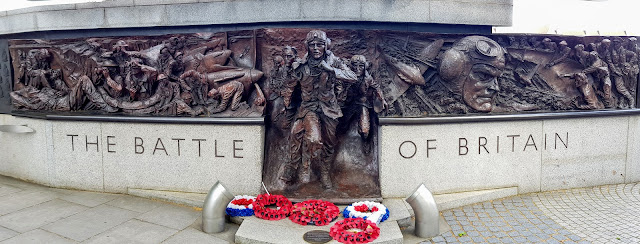
Walking along the Victoria Embankment, near Whitehall, you will discover the Battle of Britain Monument, which stretches along the pavement.

This granite and bronze monument was built so that visitors can interact with it. This impressive monument has scenes from different aspects of the Battle of Britain. From Airmen 'scrambling' to women working in munitions factories to the ground crews who kept the aeroplanes serviced... and more.

London The Unfinished City
"Never in the field of human conflict was so much owed by so many to so few."

I can happily look at this monument for hours, and still find something that I have never noticed before.

Wednesday, March 01, 2023

RAF Bomber Command Memorial

London The Unfinished City

It was on my first visit to the memorial that I began to write more about London and its history, which led me to create this blog. 

London The Unfinished City

The memorial, itself, is an amazing piece of work that inspired me to write a number of pieces about it. That is how much of an impact that it had on me.

London The Unfinished City

Should you find yourself in London's fourth largest Royal Park, then you should definitely take in this huge memorial.

Thursday, June 02, 2022

Platinum Jubilee Flypast

Thursday June 2, 2022

Our plan to watch the flypast from Green Park was scuppered by the sheer volume of people that had descended on London, so we headed to Waterloo Bridge. 

This vantage point offered us an unobstructed view of the flypast as it approached Westminster from the east.

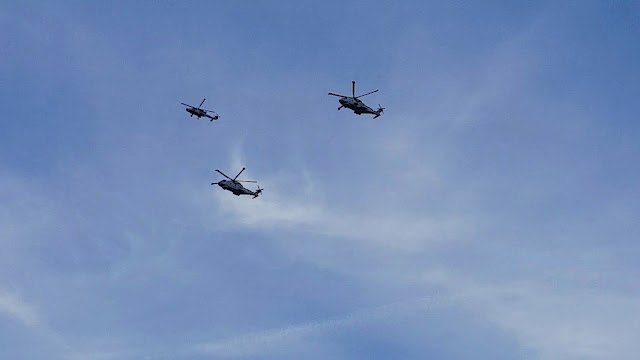
Below are some photos of the 70 aircraft that took part.

London The Unfinished City
A Wildcat and two Merlin.

London The Unfinished City
A Wildcat and three Apache.

London The Unfinished City
A Wildcat and three Merlin.

London The Unfinished City
Three Puma and three Chinook.

London The Unfinished City
A Lancaster, two Spitfire and two Hurricane (Battle of Britain Memorial Flight).

Wednesday, February 21, 2018

Blue Plaque: Sir Douglas Bader

London The Unfinished City
Not bad... for a man with no legs.

Recently I took a stroll around the Royal Borough of Kensington and Chelsea, visiting various places that I hadn't yet seen.

One of the things that I wanted to see was the English Heritage Trust Blue Plaque, to commemorate Douglas Bader, on Petersham Mews. I have been fascinated by his story since I was about 8 and thought that it was time that went to see where he had once lived.

Wednesday, December 13, 2017

Bomber Command Memorial

London The Unfinished City
"... who now stood thankful, in the early morning sun."
The Bomber Command Memorial, Green Park, is, by far, my favourite memorial, in the Unfinished City. There are countless others that I have visited, but there is something utterly unique about this memorial.

I don't know if it is the sheer scale of the memorial, or the detailing of the statues, or its setting at the corner of Green Park, that makes this my favourite, but there is something that keeps drawing me back to it, again and again.

In fact, I was so moved when I first saw it, that I ended up writing a poem the following day, entitled 'Morning Sun'.

Thursday, July 28, 2016

Royal Air Force Museum

London The Unfinished City
Avro Vulcan B2 - XL318.

Thursday July 28, 2016.

As a child I always enjoyed my visits to the Royal Air Force Museum, Hendon, so I was eager to take my two girls, Erin and Keilyn, to see what they made of it. 

Erin (5) was fascinated by the size of the aircraft and liked the various designs, while Keilyn (4) wanted to get in to as many cockpits as she possibly could. 

Her favourite aircraft were the helicopters.

Monday, September 15, 2014

Heritage Open Day: BRE's Möhne Dam Test Model

Möhne Dam Test Model
Me with the Möhne Dam Test Model.

Sunday September 14, 2014

For many years I had wanted to visit the BRE's Möhne Dam Test Model, at their site in Watford. This is because of a fascination with The Dambusters, which partly stems from the fact that a relative of mine was a Dambuster. 

Len and I arrived at the BRE site just before 10:00 and, after parking the car, joined a small group of people who had also come to see the model. We were given a quick introduction by Peter White, BRE Marketing and Communication Manager, before he led us past some of the BRE test buildings and in to a wooded area, in the centre of the site. Here, our group, of about a dozen, listened intently as Peter began to explain why the test model was built, how it was built, and by whom, with the aid of some large 'A' boards, which had further information and photographs on them.


Möhne Dam Test Model
Möhne Dam

When we reached the model itself, we were allowed to walk all around it and explore the local area. A muntjac deer peered through the trees, while a green woodpecker flitted through the branches, as I took photographs of the dam, from all angles. 

Möhne Dam Test Model

Möhne Dam Test Model

Möhne Dam Test Model

Möhne Dam Test Model

We then went up to see the Prince's House. The Prince's House was designed by HRH Prince Charles and can often be seen as the test house in BBCs Watchdog programme. 


British Research Establishment
The Prince's House

We then wandered back down to the model, before looking at some of the BRE test houses, that range from the 1960s through to the ECO-friendly houses, of the 21st century.


British Research Establishment
BRE Test Houses

On our way out of the site, I managed to get a photo of Bucknalls House. Bucknalls is a Victorian house, built in 1855 for Henry Creed, that stood at the centre of the 180 acre Bucknalls estate. Frank Thomas, the last owner of the house, made substantial extensions to the building, during 1878 and 1903. The estate itself was sold off in six lots, in 1924.


British Research Establishment
Bucknalls House

Brief History.

It all began back in 1938 when, even before World War II had begun, Dr Barnes Wallis came up with the idea of destroying the dams of the Ruhr valley with a ten-ton bomb, dropped from a height of 40,000 feet. The bomb would bury itself in the ground and cause a massive 'earthquake' that would destroy the dams. There were three problems with this scenario:
  1. No bomb of that size could be manufactured
  2. If it could be manufactured no aeroplane could carry it
  3. No current aeroplane could fly anywhere close to that height
Undeterred, Dr Wallis continued to work on a way to destroy the dams, working out the size and type of charge and its location in relation to the dam.

In October 1940 Dr Wallis was invited to a secret meeting with Norman Davey and William Glanville, where it was discussed that a scale test model should be built and tested, to see exactly what size charge would breach the dam.


This meeting was so secret that it is still impossible to find out where it actually took place; Either at the British Research Station BRS, now BRE, Watford, or at the Road Research Laboratory RRL, now TRL, Harmondsworth.

The actual Möhne Dam was opened in 1913 and its highly detailed schematics were easily obtainable, by the British Research Station, allowing the plans to be meticulously recalculated, so that a 1/50 scale model could be built. 


Möhne Dam Test Model
Möhne Dam Schematics

On Monday November 25, 1940 work began on clearing and excavating the site. The stream was widened and deepened and channelled through a pipe, that would flow beneath the dam. On Friday 29, the concrete foundation was poured, with the towers being cast on the following Monday December 2. The side wings were then added.

Möhne Dam Test Model
Under Construction

The model took four men, Norman Davey, A J Newman, A B Stapleton & A Smith, just 7 weeks to complete and, considering that the British winter was particularly harsh, with temperatures close to, or below, freezing on some days, this was no mean feat. Roughly 2 million scaled bricks measuring 0.4 inches long x 0.3 inches wide and 0.2 inches deep (10.2 x 7.6 x 5.1mm) were used to build the model, along with poured concrete.


Despite the best efforts of the planners, the model is not entirely correct. One of the measurements was incorrectly scaled, when they converted it from metric to imperial.

The model was completed on January 15, 1941 and, six days later, the reservoir was filled with water. Explosive testing began the following day, January 22, 1941. The model was then subjected to ten explosive charges from distances of three feet, two feet and one foot. 


Möhne Dam Test Model
Where the charges were placed

After the eighth detonation the model was damaged, which allowed water to seep through some cracks. After the tenth detonation the model was severely damaged. 


Möhne Dam Test Model
The 8th detonation 'cracked' the dam

These were the first, and only, tests to be conducted on the dam. All further tests were completed at RRL Harmondsworth, using cast concrete dams. These tests made it possible to work out that a 7,000 lb bomb, placed against the side of the Möhne Dam, would be enough to breach it.

The model was then left to the elements and remained secret, until 1954, when the Air Ministry issued a news release.


" 'Dig-for-Victory' allotment holders at Garston, near Watford, were bewildered and annoyed, early in 1941, when a mysterious and sudden onrush of water swept down a nearby hill and inundated their plots. The flooding at the Hertfordshire allotments came from the breaching of the first detailed scale model of the Möhne Dam which was tested at the Building Research Station".
Möhne Dam Test Model
Air Ministry News Release, 1954

The truth is that there was no breach of the dam, that would have resulted in water flooding out the allotments. As it turns out, the news release was issued as the final scenes of The Dambusters film were being shot, hence no mention of the British Research Station in the finished film.
At some point, possibly in the 1960s, the model was restored, and altered. The repairers took a piece of poetic licence when they decided to add a 'breach' in to the top of the dam.

All of the test models at Harmondsworth were destroyed by the testing. 
The Nant-y-gro dam, in Wales, was blown apart during large-scale tests.
The ship testing tanks, at NPL, were broken up, in 1996.
The BRE Möhne Dam test model, is the only piece of this amazing story to remain intact. 

In 2002, the model was scheduled by English Heritage as a historic monument of 'not just national but also international importance'.
For further and more detailed information, follow the links below.