Sunday, May 26, 2024

Dunkirk Little Ships at St Katharine Docks and Marina

Dunkirk Little Ships at St Katharine Docks
Dunkirk Little Ships at St Katharine Docks and Marina.

Saturday May 25, 2024.

With the anniversary of the start of 'Operation Dynamo', this weekend, some of the 'Little Ships of Dunkirk' had made their way to St Katharine Docks and Marina, allowing visitors to get up close to these historic vessels.

Dunkirk Little Ships at St Katharine Docks
Some of the historic Dunkirk Little Ships.

It was a beautiful summer morning as we walked around the Docks and Marina, inspecting these small boats that, 84 years ago, had made their way from Ramsgate to Dunkirk to help in the evacuation of more than 338,000 British and French soldiers. 

Dunkirk 1940 Plaque
A 'Dunkirk 1940' commemorative plaque.

Each boat was in pristine condition and each had its own story to tell, with information boards and owners and crew ready and willing to share the stories of the vessels.

Dunkirk Little Ships at St Katharine Docks
Dunkirk Little Ship 'Lady Lou'.

'Lady Lou' is one of four surviving pre-war Ramparts and was built in 1936.

Monday, May 13, 2024

Brunel Museum

Brunel Museum Tunnel Shaft
The Mural on the side of the Grand Entrance Hall.

The Brunel Museum is located within the Brunel Engine House building, Rotherhithe. This small but very informative museum allows you to descend into the Rotherhithe Thames Tunnel Shaft and visit the Engine House, where you will learn exactly what went in to building the world's first tunnel beneath a navigational waterway.

Marc Isambard Brunel designed Engine House as part of the Thames Tunnel project. Steam-powered pumps, used to extract water from the tunnel, were originally housed here, although it was used as a boiler house, between 1825-43. 

Brunel Museum Priming Pump
A Priming Pump from 1929.

In 1961 the Brunel Engine House opened and offered visitors the chance to see the interior of the building, as well as the Rennie flat V steam engine.

In 1974 the Engine House and Chimney were Grade II Listed. 

Between 1975-79 restoration work to stop structural decay was undertaken and completed.

Brunel Museum Engine House
The Chimney and Engine House.

In 2006 the Brunel Engine House changed its name to the Brunel Museum allowing the museum to incorporate other projects by the Brunel's. A new mural was created on the side of the Tunnel Shaft and benches were created in the style of Brunel bridges, in the garden area.

Brunel Museum Royal Albert Bridge
The Royal Albert Bridge, Saltash, as a bench at the museum.

Refurbishments, in 2007, included the moving of the Rennie flat V steam engine to the Chatham Historic Dockyard, thus creating a larger exhibition space and improved toilet facilities, within the Engine House. 

Brunel Museum Memorabilia
Memorabilia for the Thames Tunnel.


Thursday, May 02, 2024

Stave Hill Viewpoint, Rotherhithe

City of London from Stave Hill
Looking towards the City of London.

It was while on a recent trip to Rotherhithe that I finally visited Stave Hill viewpoint, and it was not a disappointment.

Approaching Stave Hill Viewpoint
Approaching Stave Hill Viewpoint.

Set in the Stave Hill Ecological Park this artificial hill stands stands 9 metres (29.5 feet) in height and offers incredible 360 degree views out across London. There are sixty concrete steps that need to be climbed, but it is definitely worth the climb. There is a handrail either side, to assist those less able.

Stave Hill Viewpoint Steps
The 60 Steps.

Obviously, the closest buildings to see are the ever increasing amount of buildings at nearby Canary Wharf, but there is more to see: Nine Elms, the BT Tower, Nine Elms, the City of London and all points in between. 

Monday, April 29, 2024

Walking with Keilyn: Brunel Museum to Rotherhithe... and beyond

Keilyn at the Brunel Museum
Keilyn ready to visit the Brunel Museum.

Saturday April 27, 2024.

Another Saturday saw Keilyn and I take another trip to London. Specifically to visit the Brunel Museum, but then to explore the area.

Our trip began the same way as usual; Metropolitan line to Finchley Road and then on to Bermondsey.

Our first stop, on reaching Bermondsey, was to grab a coffee and hot chocolate, which we purchased from the Servewell Cafe, before continuing along Jamaica Road to Southwark Park. The forecast said that rain was due at around 14:00, so we decided to visit Southwark Park before it began.

Keilyn in the bandstand
Keilyn at the Southwark Park Bandstand.

We visited the bandstand, before passing the bowling green, crossing Carriage Drive, where we discovered the Caryatids of Rotherhithe Old Town Hall. 
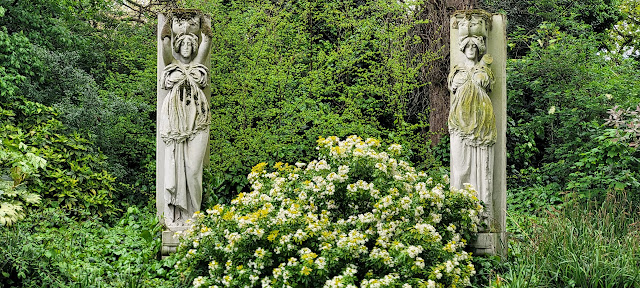
The Caryatids of Rotherhithe Old Town Hall
The Caryatids of Rotherhithe Old Town Hall.

From here we entered the Ada Salter Garden and then made our way around Southwark Boating Lake, before heading back towards Jamaica Road and King's Stairs Gardens.
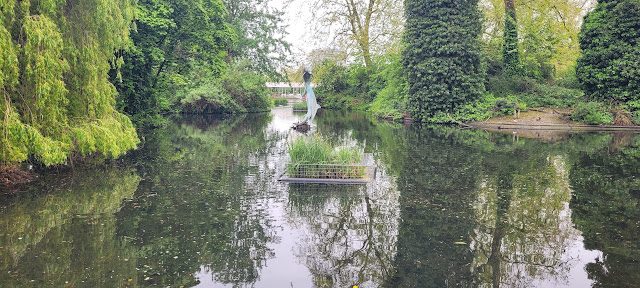
Southwark Park Boating Lake
Southwark Park Boating Lake.

From here it was a short walk along Saint Marychurch Street to the Brunel Museum, passing the historic Mayflower pub along the way.
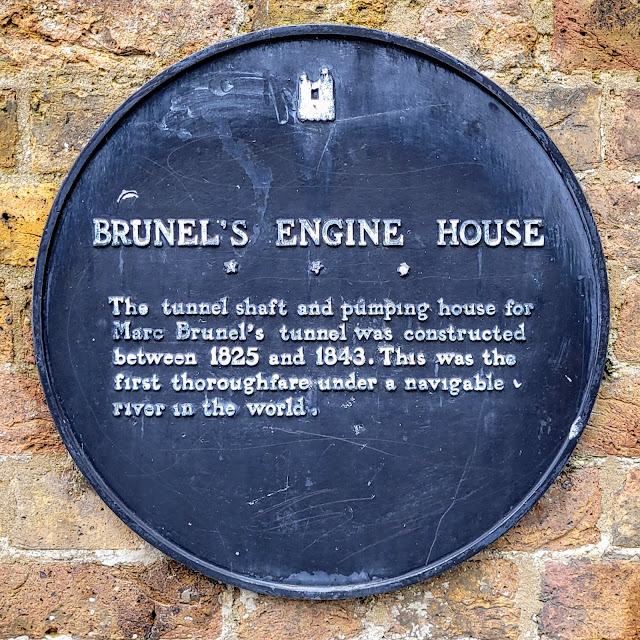
Brunel Museum Plaque
Brunel's Engine House plaque.

To our surprise the Brunel Museum was deserted, so we had the entire place to ourselves for our entire visit. After purchasing our tickets, Keilyn was issued with a clipboard with two sheets of questions about the museum and the history of the Thames Tunnel, called 'The Brunel Detective Trail'.
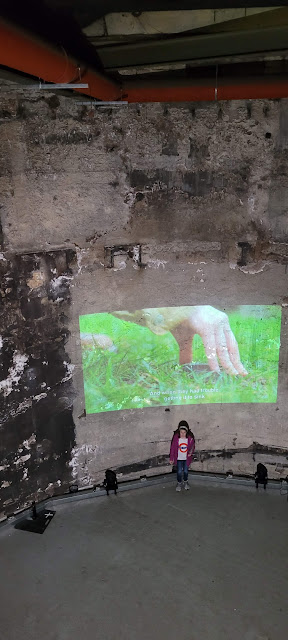
Thames Tunnel Shaft
Keilyn 50-feet down the Thames Tunnel Shaft.

Our first stop was to the Thames Tunnel shaft, from where the tunnel's construction began. After being ushered in to this cavernous shaft, with its bare brick and smoke-coated walls, we were left to explore on our own. At the bottom of the shaft Keilyn and I took a seat and watched a 4-minute video, that was set on a continuous loop, that explained the reasoning, construction and effect the Thames Tunnel had on London and the world. As we watched the video we could hear, and feel the London Overground (The Windrush line, from Autumn 2024) rumbling past beneath our feet.

Brunel Museum
Some of the artefacts on display.

Thursday, April 25, 2024

Ornamental Canal, Wapping

Ornamental Canal, Wapping
Looking along the Ornamental Canal towards The Shard.

Just to the east of St Katherine Docks and Marina you will find Hermitage Basin, a small oasis amid a now residential area. This basin is all that is left of the London Docks, which were filled in for redevelopment in around 1983.

Ornamental Canal, Wapping
The old walls of the London Docks.

To keep the history of the London Docks alive a canal was designed, that would link Hermitage Basin to Shadwell Basin. This canal was not designed for river traffic and so was built as an ornamental reminder of bygone times.

Ornamental Canal, Wapping
Not navigable, but full of wildlife. 

The former dock walls were used as features along the Ornamental Canal, which would pass alongside Tobacco Dock, the only warehouses to survive the redevelopment, as it made its way in a north-easterly direction towards Shadwell Basin.

Tobacco Dock and ships
The Tobacco Dock warehouses were built in 1812.

As the canal nears Shadwell Basin it passes beneath Wapping Woods, so the towpath leads you up through this wonderful little park, before rejoining the canal near Shadwell Basin.